

Exploring the intricate relationship between sleep and long-term brain health unveils a fascinating journey into the depths of cognitive function and memory retention. As we delve into the importance of quality sleep, the impact of different sleep stages, and the role of sleep in neuroplasticity, a clearer picture emerges of how crucial a good night's rest is for our brain's well-being.
Importance of Sleep
Sleep plays a crucial role in maintaining overall brain health. It is during sleep that the brain processes and consolidates memories, clears out toxins, and restores energy for the next day. Lack of adequate sleep can have detrimental effects on cognitive functions in the long term, impacting memory, decision-making, and overall mental clarity.
Significance of Sleep Quality
Poor quality sleep, characterized by frequent awakenings, interruptions in the sleep cycle, or sleep disorders, can significantly impact brain health. When the brain is unable to go through the necessary stages of sleep, such as REM and deep sleep, it can lead to impaired cognitive function, mood disturbances, and even increase the risk of neurodegenerative diseases like Alzheimer's.
It is essential to prioritize both quantity and quality of sleep to ensure optimal brain health.
Sleep Stages and Brain Health
Sleep is divided into different stages, each with specific characteristics and effects on brain functions. These stages are crucial for maintaining long-term brain health and cognitive abilities.
NREM Sleep
NREM (Non-Rapid Eye Movement) sleep consists of three stages: N1, N2, and N3. During N1 and N2, the brain transitions from wakefulness to deeper sleep, preparing the body for the restorative stage of N3. N3, also known as deep sleep, is essential for physical restoration, immune function, and memory consolidation.
It plays a vital role in promoting overall brain health by allowing the brain to remove toxins and repair itself.
REM Sleep
REM (Rapid Eye Movement) sleep is characterized by vivid dreams and rapid eye movements. This stage is crucial for cognitive functions such as learning, memory consolidation, and emotional regulation. REM sleep is believed to be essential for processing information and forming new neural connections, which are crucial for long-term brain health.
Comparison
Both deep sleep and REM sleep are vital for brain health, but they serve different purposes. Deep sleep focuses on physical restoration and memory consolidation, while REM sleep is more closely associated with cognitive functions and emotional well-being. A healthy balance of both stages is necessary for optimal brain health and cognitive performance.
Memory Consolidation During Sleep
Sleep plays a crucial role in memory consolidation and retention. During sleep, the brain processes and stores information gathered throughout the day, strengthening neural connections associated with memory formation.
Correlation Between Sleep and Memory Formation
Studies have shown a clear correlation between sleep and memory formation
This highlights the importance of sleep in enhancing memory consolidation.
Importance of Uninterrupted Sleep for Optimal Memory Function
Uninterrupted sleep is essential for optimal memory function as it allows the brain to go through different sleep stages, including REM sleep, which is critical for memory consolidation. Interruptions in sleep, whether due to environmental factors or sleep disorders, can disrupt this process and lead to impaired memory function.
Therefore, ensuring a good night's sleep without interruptions is vital for maintaining a healthy memory.
Neuroplasticity and Sleep
Sleep plays a crucial role in neuroplasticity, which refers to the brain's ability to reorganize itself by forming new neural connections. During sleep, the brain consolidates memories, strengthens synaptic connections, and clears out toxins, all of which are essential for learning and cognitive function.
Sleep Deprivation and Neuroplasticity
Research has shown that sleep deprivation can have detrimental effects on neuroplasticity. Lack of quality sleep can impair the brain's ability to form new connections and adapt to new information. This can lead to difficulties in learning, memory retention, and overall cognitive function.
Sleep and Synaptic Connections
During sleep, the brain undergoes processes that promote the formation of new synaptic connections. These connections are crucial for learning and memory consolidation. Adequate sleep ensures that these connections are strengthened, allowing for improved cognitive function and overall brain health.
Ultimate Conclusion
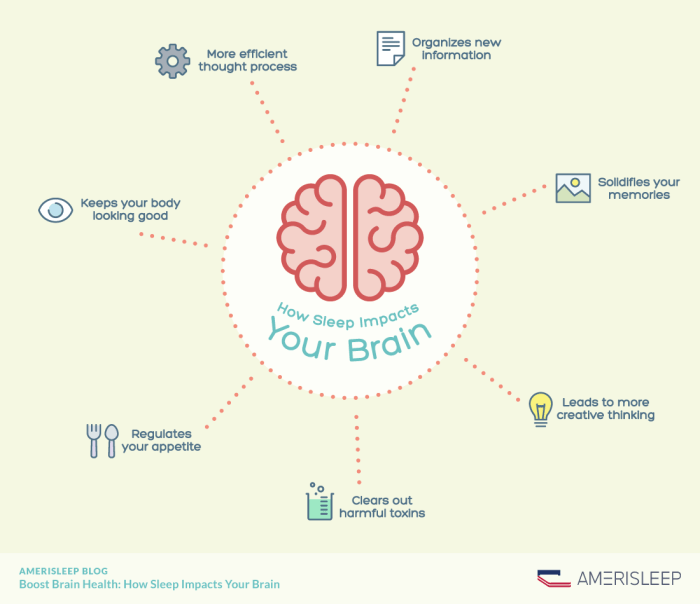
In conclusion, the profound effects of sleep on long-term brain health cannot be understated. By understanding how sleep influences cognitive abilities, memory consolidation, and neuroplasticity, we gain valuable insights into optimizing our brain function through restful nights and healthy sleep patterns.
Query Resolution
How does sleep quality affect long-term brain health?
Sleep quality directly impacts brain health by influencing cognitive functions, memory consolidation, and neuroplasticity in the long term.
What are the different stages of sleep and how do they contribute to brain health?
There are several stages of sleep, including REM and deep sleep, each playing a vital role in cognitive abilities and memory retention for long-term brain health.
Can interrupted sleep hinder memory consolidation?
Yes, interrupted sleep can disrupt the process of memory consolidation, affecting long-term brain health and cognitive function.

